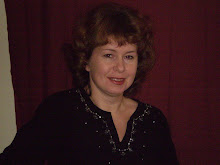
«Вам прописали антидепрессант»


Регистрированный психотерапевт Марина Свиташева Ph.D.   

 Есть такой особый вопрос, задаваемый людьми с хронически сниженным настроением, плохим сном и чувством обездвиженности. Это вопрос о необходимости антидепрессанта. Достаточно часто он задаётся, когда разговор с семейным доктором уже состоялся, а доктор уже выписал рецепт. Примечательно здесь и то, как охотно семейные доктора выписывают антидепрессанты, и то, как человека не оставляют сомнения по поводу нужности их приёма.

     Докторов понять легче. Для них депрессивные состояния – это “medical condition”, нарушение химического баланса в мозге. Ясное дело, он может быть востановлен химическими средствами. Вот и рецепт! Однако, когда он в руках, подступают сомнения. Многие беспокоятся о возможности привыкания и формирования своего рода химической зависимости (эти беспокойства напрасны). Для кого-то приём антидепрессанта означает, что дела совсем плохи. Кто-то избегает любых лекарств в принципе. Кто-то слышал от других, что антидепрессанты не помогают (что тоже случается). Кроме того и опыт приёма препарата может оказаться неприятным. Психотропные препараты действуют очень индивидуально. По большому счёту они должны тщательно подбираться опытным путём с варьированием дозировки.

     При этом ответ на вопрос «стоит ли принимать антидепрессанты» может находиться совсем в другом  поле. Химический баланс в головном мозге – это вещь важная, но ничего не объясняющая. Дело в том, что любые наши переживания сопровождаются изменениями в гормональном фоне. Они суть одно. Стало быть связь между депрессивным состоянием, эмоционально таким тяжёлым, и химическим дисбалансом не является причинно-следственной. Они вместе суть одно явление, презентирующее себя и на биохимическом и на психологическом уровне.

     Тем не менее, если призадуматься о причинах возникновения этого состояния, можно обнаружить, что в подавляемом большинстве наблюдаемых случаев сначала что-то произошло (или происходило): неуспехи, нелюбовь, несчастные случаи, большие печали – что-то, чему оказалось невозможно противостоять.

     У депрессии – психологические причины! Немудрено, помощь антидепрессантом сомнительна. Психологические причины лечатся психологическими (точнее – психотерапевтическими) средствами.

     С одной стороны – опыт, который не удалось прожить и ассимилировать соответствующим образом, грузом ложится на сердце и не пускает двигаться. Ни душевно, ни физически. Страдающие депрессией люди рассказывают, как им ничего не хочется делать и как ни на что не хватает энергии. А энергия спряталась внутри. И опять начнёт циркулировать, если получится разобраться со старыми завалами душевного опыта: что-то принять, с чем-то проститься, от чего-то освободиться, ответственность за что-то принять. Тут таблетки не помощники. Тут надо разговаривать!

     С другой стороны – победа над депрессией предполагает хотя бы крохотное первоначальное усилие, такое маленькое преодоление: предпочесть какой-то вкус или запах, выбрать ступеньки вместо эскалатора, прогуляться на свежем воздухе, позвонить психотерапевту, в конце концов...

     Данная статья выражает мою сугубо психотерапевтическую – немедицинскую – позицию. Разговор о нехватке серотонина в мозге и о роли допамина там же опущен намерено. Однако будет уместным напомнить, что нужные гормоны в организме вырабатываются лучше, если быть физически активным и подставиться солнечному свету.

     И это возвращает нас к теме антидепрессантов. Препарат, если он ваш (удачно подобран и по характеру действия и по дозировке), должен снижать интенсивность симптомов депрессии. Однако психологические причины медикаментозно не могут быть сняты. Поэтому важно иметь адекватные ожидания на этот счёт и ставить адекватную задачу. Если речь идёт о серьёзных ограничениях функционирования (хроническая бессонница, сильная телесная слабость, чувство, что жить «просто бессысленно» и т.д.) и никакое минимальное усилие представляется невозможным, видимо нужна медикаментозная помощь. Корни депрессии останутся нетронутыми, зато появится шанс и некий ресурс для психологических усилий. Они абсолютно обязательны.

     Если думать, что любая проблема здоровья – это «послание», то послание депрессии – «что-то идёт не так». Не вокруг тебя,  но в тебе! Антидепрессант может быть помощником в решении проблемы, но ни в коем случае не обеспечивает решения сам по себе. Чтобы внутренняя жизнь наладилась, её надо налаживать. Некоторым людям удаётся переосмыслить свои связи с миром самостоятельно. Некоторым людям как-то помогают обстоятельства, особенно если упомянутые выше маленькие усилия для преодоления депрессии совершаются. Психотерапия – тоже не последняя по уместности вещь. Но главное – без вашего участия восстановление не произойдёт.

     Общего ответа на вопрос «надо ли принимать таблетки от депрессии» нет. Этот вопрос индивидуален. В тяжёлом случае наилучший прогноз даёт комбинация медикаментозного лечения и разговорной психотерапии. В любом случае  наилучший прогноз даёт большая душевная работа (возможно, с поддержкой психотерапевта)  и внутренняя готовность меняться.

Registered Psychotherapist

Maryna Svitasheva Ph.D., Registered Psychotherapist. (356 Windermere ave.)
I got my training in Psychotherapy in 1995-1997 at the Moscow Institute of Gestalt and Psychodrama.
Since then my psychotherapeutic repertoire has been extended with CBT, Solution Focused therapy, art-therapy (music and drawing).

Prior contacting me please take in to account following:
 1) I know how to look for a solution, but I don't have "a recipe for you". We are going to develop it together.
 2) A Gestalt method I practice assimilates perfectly many other approaches. That's why I can use the tools from music- and art-therapy, CBT and Solution Focused therapy, Family therapy and Psychodrama.
 3) My professional skills and an individual style are more important than therapeutic methods I use. 
 4) I use both an office and Skype space (if you live out of GTA).

To make an appointment you may call 416-886-9392 or e-mail svitasheva.psychotherapist@gmail.com 

In this blog you may find more materials about me and the articles which express my understanding of some psychotherapy related topics. 
Maryna Svitasheva Ph.D. Psychotherapist. (356 Windermere ave.)
I got my training in Psychotherapy in 1995-1997 at the Moscow Institute of Gestalt and Psychodrama.
Since then my psychotherapeutic repertoire has been extended with CBT, Solution Focused therapy, art-therapy (music and drawing).

Prior contacting me please take in to account following:
 1) I know how to look for a solution, but I don't have "a recipe for you". We are going to develop it together.
 2) A Gestalt method I practice assimilates perfectly many other approaches. That's why I can use the tools from music- and art-therapy, CBT and Solution Focused therapy, Family therapy and Psychodrama.
 3) My professional skills and an individual style are more important than therapeutic methods I use. 
 4) I use both an office and Skype space (if you live out of GTA).

To make an appointment you may call 416-886-9392 or e-mail svitasheva.psychotherapist@gmail.com 

In this blog you may find more materials about me and the articles which express my understanding of some psychotherapy related topics. 
EATING DISORDERS AS A BIO-PSYCHO-SOCIAL DISCONNECTION IN    THE LIGHT OF A GESTALT APPROACH

Eating disorders (mainly bulimia, anorexia, and binge eating) – are severe disorders of eating behaviour which represent themselves in the disconnection between the biological need for food and the psychological experiencing of the need for food.

The disconnection between the biological need for food and its psychological experiencing can be described in the following way: biologically our body needs to consume a certain amount of nutritious substances, at the same time psychologically we don`t feel a need for nutritious substances in themselves, but we experience hunger, satiation, craving, pleasure, disgust, etc. For example: biologically our body might need protein. As long as protein is a chemical phenomenon we cannot want (psychologically) to eat protein. Psychologically we can want to eat a piece of meat or an egg. The biological needs represent themselves in psychologically experienced desires, preferences, and behaviour: when we are hungry – we eat, when we are satiated – we stop eating, we make our choices regarding “what to eat”, “where to eat”, and so on. It is crucial for our topic of eating disorders as a bio-psycho-social disconnection to see the boundary between the realms of “substances” and “every-day-life things” we deal with in a routine way, and to describe them with the non-specific, every-day-life language. So, proteins and carbohydrates belong to the “chemical realm”. We have some knowledge about them as chemical substances but we don’t experience them as such. What we do experience – is food: a steak, eggs-over-easy, a glass of warm (or cold – if you prefer) milk, etc. The chemical substance represents itself in the things, which can be objects of our direct attention – which is the food itself.

Normally the correlation between the biological needs and their psychological representations exists out of our consciousness: being thirsty we are looking for a glass of water and don’t think about the water-and-salt balance. What is even more important - we don’t need to know that this balance exists. This last point is essential: the connection between the biological needs for food and their psychological experiencing is not supposed to be part of our awareness.  This crucial fact determines the severity of the eating disorders: in the first place on the level of individual functioning it is a disconnection between two realms – biological and psychological; in the second but more important place – it is a broken connection which is supposed to be automatic and is not supposed to be the focus of our conscious attention. This provides the explanation why the treatment of eating disorders is so time-consuming and so often producing only temporary results.

Another aspect of eating disorders is related to the social side of eating. Unfortunately we have to consider one more disconnection – that is between the consumption of food and the social environment and the social circumstances for eating. This theme is not simple to consider because we have to touch the issue of “social norms” (which are definitely relative) on one side, and the results of the social-historical development - on the other. Here I dare to say that some aspects of eating disorders are consequences of the person’s disconnection with some social values and routines related to eating. Let’s start with the list of socially determined aspects of eating which I consider healthy:

-To have an approximate eating “schedule”;
- To enjoy tasty food;
- To eat at the table;
- To use “real” plates, forks, spoons, knives (not plastic or paper);
- To set the table in an aesthetically pleasing way;
- To enjoy eating together in company;
- To appreciate an opportunity to eat tasty food in a beautiful environment together with pleasant people
- To eat with an appetite;
- To prefer not to eat when not hungry.

I consider the following aspects of eating to be unhealthy:

- To eat in a hurry in inappropriate places (in a subway, or in bed – if you are not sick);
- To eat while pursuing other activities (e.g. reading, watching television, at the computer);
- To eat what is «good for you» regardless of whether or not you like it.

Our urban everyday life is a real challenge. Not having enough time, people eat in the car, the subway or on buses, very often just out of their hand. The “ocean” of snacks that are available sweeps over the practice of eating regular meals. The fact that the North American (including Canada) portion in restaurants is gigantic has been discussed already many times. Even a mindful attitude toward food and eating has lost an important link – that of the pleasure associated with eating. People today are obsessed with the idea of healthy food (low fat, low salt, low sugar), and this layer of knowledge does not allow them to enjoy the food directly, and closes the way for intuitive preferences. (By the way, for instance, very often those who appreciate the good taste of food are not into using much salt). Summarizing the social messages about food and eating, we have to admit that they are not positive and healthy. They are: “It is OK to neglect the process of eating” and ”Don`t trust yourself.”. These messages do not lead directly to eating disorders, but when the sphere of eating becomes problematic for the person this social set starts working very strongly against the person.

It is appropriate to remind ourselves that historically human eating is a social action. A contemporary tradition in which the family eats together as part of a celebration (e.g. a wedding, or a funeral) is an indirect confirmation of this idea. When we eat together we share not only a common space and time. We also experience similar taste sensations, we commit the same physical movements (chewing, swallowing, etc.); even the fact that we suspend the conversation during eating is significant – it works positively for our trust for each other (that is why “a business lunch” is a successful way of negotiating a deal!). In relation to eating disorders I have to mention that laboured eating in public is a very frequent symptom of an eating disorder, and – on the other hand – one of the earliest signs of recovery is the ability to eat in company without any other signs of the disorder.

In summarizing I would like to say that when dealing with an eating disorder we have a situation when: 1) eating is not an adequate response to the body's need for food; 2) the body's need for food does not reflect itself in eating behaviour; 3) eating does not connect the person with others. The psychotherapeutic consideration I am going to move to below demands one more observation I have made while working with the eating disordered population:  these clients very often have complicated relationships, in particular – they experience real predicaments in setting psychologically well-balanced working distance with partners, or with relatives. An accurate description for this kind of relationships is that “she/he is stuck in this relationship”. This last statement may work as a good stepping stone for analyzing eating disorders in the light of Gestalt-therapy because it helps us to ask a couple of really Gestalt-questions: 1) what are the characteristics of the “self'' boundary for the person with ED? and - 2) what is the way of contacting that this person implements?

Presumably this boundary does not work as an “in-and-out post”. It lets in unlimited food in the case of binge eating, it lets in specific foods in an amount which is not supposed to be assimilated – in the case of bulimia, and it does not work as an entrance in the case of anorexia.
It is clear that the cycle of contact does not work. Craving as a specific state which is typical for the clients with ED, is not analogous to the desire which the person may have regarding what, when, and where she/he wants to eat. Nevertheless this choice is supposed to be made at the stage of the pre-contact. The pleasure and joy related to the eating process which pertains to the stage of contacting – are omitted as well. Post-contact never comes: a bulimic person misses the moment “it’s enough” and a bit later - like remembering suddenly – removes abundance (excess) out of the body. Therefore a bulimic does not have a chance to experience sufficiency. The same may be said about a binging person: she/he does not receive the inward signal “it’s enough”; therefore the post-contact is missed also. (I am deliberately not commenting on cases of anorexia. No doubt this disorder can be described in the same Gestalt terminology. However this disorder is not an analogy for binge eating and bulimia. Anorexia is much more dangerous and has more existential aspects. This article is short, and I would like to avoid over-simplifying). Instead of anticipation, pleasure, and satisfaction – which pertain to healthy eating – the clients with ED experience craving, the feeling of the loss of control, and guilt.

A story told me by one friend of mine helped me to see a lot of similarity between the life stories of the patients in the ED Clinic:

A young girl grew up in a family where the casual menu included a lot of perogies, pancakes, pies, and so on. Looking at her childhood photos she could say that she was a chubby girl but was not heavy. One day (she was about 10 years old at that time) her grandmother came from far away to visit the girl’s family. She had never seen her granddaughter before. The girl was very excited to meet her unknown grandmother. When the grandmother met the girl the first thing she said – in a joking manner – was “Oh, she is fat!” Those words had a huge impact on the girl, she refused almost everything to eat and lost a lot of weight. This situation of restricted eating lasted several years until the point when the girl made a friend who taught her how to induce vomiting. So, the character of our story became a bulimic. This lasted until her twenties. At this age she became a student of one of the major universities. As she said, her studies were very interesting; she socialized with other young people who were into learning as much as she was. The issues related to her weight control did not make sense any more. From then her eating disorder was over.

When trying to transfer this ED story to the Gestalt schema I noticed some resemblance between stories of others. We have: 1) a piece of information (new and negative) had been incorporated forcibly into the set of the girl’s knowledge about herself; 2) due to the high positive meaning of the resource of the information (her grandmother) it was accepted without any checking or critique (consequently it became an introject); 3) the girl was not aware of her emotions related to the grandmother’s remark; she didn't talk about it to anybody else. This fragment of her experience had not been assimilated, which means – it became traumatic and rigid.

Observing other people with ED we can see the links of the same schema: a subjectively traumatic experience in childhood and rigid understanding of the body shape issues. The fact of the “broken boundary" (which is a trauma) explains why the boundary has a defect and does not work properly; this fact also determines the main mechanisms which interrupt the contact (there are confluence and introjecting).
Having said this, we can see the scenario which is so typical for people with ED: usually they don’t enjoy eating; they have an inclination to introject, for not only the information related to food or body shape; they don’t know what their preferences are when they have a choice; often they are unhappy in their relationships – either not having them or being in confluence.

Therefore we can see that ED in the Gestalt key may be understood as a disorder of the “self” boundary functioning. I would go further and state that the “self” boundary and the traumatic experience are the most appropriate objects for therapeutic attention. The broken connection between biological and psychological, biological and behavioural, individual-behavioural and social (which significantly present in the nature of ED) can be restored by the restoration of the “self” boundary and completing of the traumatic experience which initiated the disorder.

   After my positive experience with the Therapeutic Group working on trauma-related issues I announce  two new groups: one - for people who struggle  with different sequences of the traumatic experience (either the painful relationships or some accidents); another one - for people who have some relational difficulties at their working places. This group will be smaller and will work on the problems which are relatively resemble.
   Those people who contacted me regarding the first (September-December) group but did not participate that time - are well come. At the preliminary meeting you may ask more questions, express more hesitations, have more my comments...


                                  Psychotherapist Maryna Svitasheva Ph.D.,   OACCPP member,
                                                                        Invites you                                                                                                                                                                                                                                                                                                                                                 

                                  A  THERAPEUTIC  GROUP                                            
                                        working on trauma-related issues   
                                                 

                                         (history of painful relationship,                                                
                                         traffic or other accident,                                                          
                                                  eating issues,                                                                          
                                 experiencing anxiety, guilt or shame)                                         


                                                           14 sessions $280                                                                             
                                              Starting on February 9                                                                    
                                       One 2 ½  hour session per week                                                    
                                      On Saturday 3:00 pm – 5:30 pm                                                    
                                                 310 Danforth ave.                                                                            
                                            (Chester subway station)                                                              

                                          To make an appointment for                                                          
                                           a preliminary individual                                                                   
                                                free meeting call                                                                                
                                            416-886-9392  

                           http://svitasheva-psychotherapist.blogspot.com   


Psychotherapist Maryna Svitasheva Ph.D.,   OACCPP member
Invites you to


A  THERAPEUTIC  GROUP

working on issues related to

the social experience

(difficulties in communication
with co-workers,
employers,  employees,
feeling uncomfortable in public,
official or informal situations.)

12 sessions $360
Starting on February 16
One 2  hour session per week
On Saturday 6:00 pm – 8:00 pm
310 Danforth ave.
(Chester subway station)


To make an appointment for
a preliminary individual
free meeting call
416-886-9392
http://svitasheva-psychotherapist.blogspot.com     


Psychotherapeutic group

                       Psychotherapist Maryna Svitasheva Ph.D., OACCPP member,
                                                           Invites you to
     A THERAPEUTIC  GROUP
                     (with a dynamic)
             Working on trauma-related issues (history of painful relationship, traffic accidents, eating issues, anxiety, phobias, difficulties in communication, etc.)
                               12 sessions
                      Starting in September
             One two-hour session per week
                    On Saturday afternoon
                      Cost $10 per session
   Preliminary individual free meetings will take place in August
                        310 Danforth ave.

    To make an appointment call  416-886-9392


       The benefits of the group therapy
       # It is much easier (than going through the individual therapy) to transfer your new healthy experience – developed in the group – to your every day social life.
      # The therapeutic process is continuing for you even when the therapist is not focused on you directly.
      # The members of the therapeutic group are supposed to be active participants, not passive listeners. Nevertheless you participate in the process in your own emotionally affordable way.
      # Dealing with others’ feelings and experience may be as much beneficial as therapeutic work on your own experience. Therapist’s support is guaranteed.
      # Finally – group therapy is much more affordable financially.

ABOUT ME

There are different ways I may go to present myself as a professional psychotherapist.
I might present a chronological list of the educational and supervision programs I went through or of workshops I presented at different conferences in Europe.
I could also tell you a story of growing understanding of the power which the therapeutic relationship has in Gestalt therapy.
Or I might begin a description of my endless journey through the world of therapeutic methods, various attitudes toward psychotherapy in general, and clients' expectations.
I studied Gestalt therapy in Moscow (Russia) in 1995-1997. After receiving a Certificate of a Gestalt-therapist and a Gestalt-consultant I developed an extensive private therapeutic practise in the Ukrainian city of Dnipropetrovsk. Membership in the Ukrainian Union of Psychotherapists allowed me to communicate with the colleagues from many European countries(UUP - which is an umbrella member of the European Association of Psychotherapy, EAP) .  These connections, together with a supervision 5-year program provided by EAP, enriched my initial training. I gained my professional confidence, and started my trainer activity in the educational programs UUK provided.
In 2007, for personal and social reasons of the time, my family and I left Ukraine.  It was good to reveal how many tools I had to overcome during that period of culture shock: my in-depth understanding of the human nature, my inclination to be attentive to my own feelings, the huge experience of helping other people when they need a therapeutic support, my general curiosity, and a passionate desire to integrate myself into Toronto's social, cultural, and professional life.
Today I am a Gestalt-therapist in Toronto . Thanks to my contact with the Toronto Gestalt Institute I may say that all Gestalt-therapists all over the world speak the same language. Due to my current therapeutic experience I have made one more very valuable discovery: there are certain cultural differences between clients in different countries, but these differences are only the surface layer; the fears, the pain from traumas, the need to be healthy and joyful are both сommon and individual for all of us on the planet.
The Gestalt method I use gives us the access to your the core problem. Also it gives us the means to overcome the problem at  its base. What do we do?  Most obviously, we are talking. We try to avoid any kinds of the excuse or explanation (because it is very easy to come up with an explanation), and we are focused on your feelings and attitudes (because that is what is our human life - admiration and disillusionment, joy and sadness, trust and misgiving, curiosity and apprehension, respect and contempt, as well as love, indifference, irritation, anticipation, and all of our other complicated emotions)
The cycle of the Gestalt therapy may be brief or prolonged. We start with 10 sessions - as intensive as is possible for the client. Very often this short-term course is enough, and the results may be discussed. In other often cases - brief therapy gives only partial results, and then we may reconsider the agreement and plan prolonged therapy.
One session lasts 50 (+/-) min. The first visit needs to be longer (this additional time is not paid)  - to make a psycho-therapeutic agreement and familiarize the client with principles of confidentiality the therapist follows. Additional time may be used also for the questions the client has before going far to the therapeutic process
Powered By Blogger
Powered by Blogger